
Why the Bible’s Most Cringe-Worthy Parable is Actually a Masterclass in Boundaries
We’ve all heard the Sunday school version of Jesus’s Parable of the Ten Young Women (Matthew 25:1–13). The standard takeaway is simple: “Be good, be faithful, and stay ready.”
But if you actually sit down and read the mechanics of the story with a skeptical, rational eye, it reads less like a cozy spiritual lesson and more like a deeply awkward reality TV trainwreck.
Let’s recap the plot, because it is wildly unhinged:
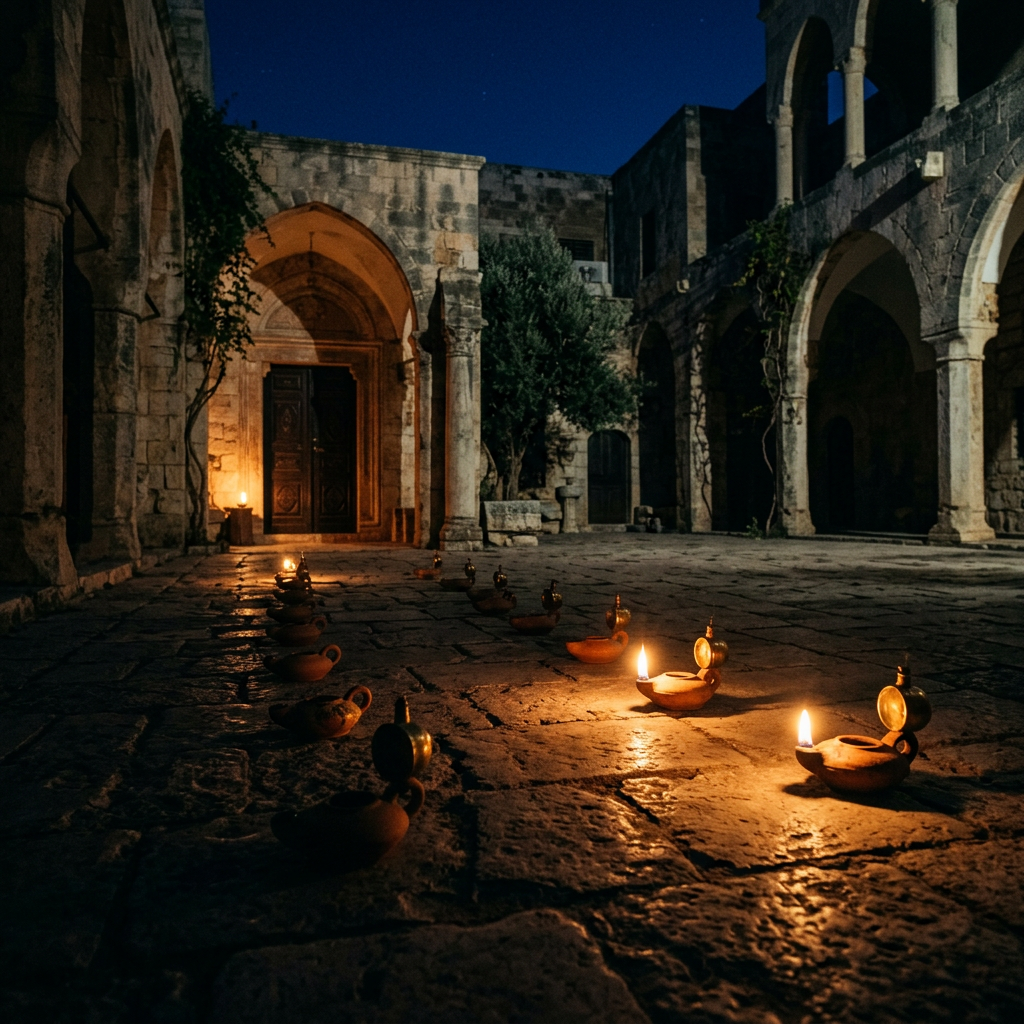
Ten young women are waiting as bridesmaids for a bridegroom to show up for a wedding procession. Five of them are “wise” (they brought extra flasks of oil for their torches) and five are “foolish” (they brought torches but no backup fuel).
The groom is delayed. In fact, he is massively late. He doesn’t show up until midnight, at which point all ten of the young women have passed out from exhaustion on the side of the road. Suddenly, a shout wakes them up: “He’s here!”
The foolish bridesmaids realize their torches are sputtering out. They turn to their friends and say, “Hey, can we borrow some oil?”
And the wise bridesmaids basically reply: “New phone, who dis? No. Go find a 24-hour convenience store at midnight in first-century Judea. Good luck.”
While the foolish ones are off on this midnight wild goose chase, the groom arrives, takes the five prepared women inside, and locks the door. When the late bridesmaids finally return and knock, the groom doesn’t just say they missed the cake. He delivers the ultimate cold-shoulder line: “Truly I tell you, I do not know you.”
Yikes.
On the surface, this story feels deeply uncharitable. Aren’t we supposed to share? Aren’t these women supposed to be friends? Why is the groom acting like a tyrannical bouncer at an exclusive nightclub?
But if you strip away the religious language and look at this as a raw psychological study in crisis management, it stops being a story about petty gatekeeping and becomes a brilliant, brutal lesson in game theory, systemic survival, and why sharing is sometimes a suicide pact.
The Logic of the Lifeboat (Why Sharing is Bad Math)
The initial impulse of any decent human reading this is to judge the wise bridesmaids. “Just give them half your oil! Be nice!”
But the wise bridesmaids immediately run the macro-level math of survival. They realize that torch-style lamps burn fuel at a fixed, aggressive rate. If they split their finite resources in half, all ten lamps will go dark before they reach the venue.
If they share, the entire wedding procession collapses into pitch darkness. The groom arrives to a failed event. The casualty rate for the mission becomes 100%.
By drawing a hard, ice-cold boundary and saying “No,” the wise bridesmaids ensure that 50% of the system succeeds. It is a strictly utilitarian calculation: it is mathematically and logically better for half the group to survive and execute the goal than for 100% of the group to perish together in polite solidarity.
Reverse Crab-Bucket Dynamics
We’ve all heard of the “crab bucket” mentality—the toxic human tendency where people at the bottom of a situation will actively pull down anyone who is successfully escaping, ensuring everyone fails together out of envy.
At first glance, you might think the wise bridesmaids are the crabs. But look closer: the dynamics are entirely reversed.
The wise bridesmaids aren’t sabotaging anyone. They aren’t knocking over the other women’s lamps or pulling them down. It’s the foolish bridesmaids who are trying to initiate the crab bucket effect. By demanding a share of a non-shareable resource in a moment of panic, they are attempting to drag the prepared people down into the dark bucket with them. They want to equalize the outcome at the expense of everyone’s survival.
Saying “No” is the ultimate defense mechanism against the crab bucket.
Why the Slackers Actually Benefit from Being Told “No”
Here is the deepest, most fascinating twist of the parable: The foolish bridesmaids actually have the most to gain from being rejected.
Think about the alternative. If the wise women had enabled their lack of preparation and shared the oil, the entire wedding would have been ruined. The event would have collapsed.
By holding the line, the wise bridesmaids protect the integrity of the system. The wedding still happens. The lights stay on. The party succeeds. A world where the organization or community you care about succeeds without you is still objectively better than a world where it is utterly destroyed because someone coddled your negligence.
Furthermore, being left in the dark forces the foolish bridesmaids to face the unvarnished, brutal feedback loop of reality. They are forced to take agency, go to the merchants, and actually acquire their own oil. They are forced to upgrade their internal resilience for the next crisis.
The Real-World Takeaway
In our modern, secular lives, “oil” isn’t moral righteousness—it’s internal resilience.
It’s the quiet, boring, invisible work you do on yourself when no one is watching. It’s your emotional maturity, your emergency savings, your critical thinking skills, and your coping mechanisms.
And the harsh truth of human psychology is that resilience cannot be borrowed, downloaded, or panic-bought at midnight. When a market crash, a health emergency, or a systemic crisis hits, you cannot outsource your core responsibilities to your friends. You cannot cram for a crisis. You either have fuel in your vessel, or you don’t.
So the next time you feel guilty for setting a hard boundary against someone else’s predictable, last-minute emergency, remember the Parable of the Ten Young Women. Sometimes, keeping your lamp lit isn’t selfish—it’s the only thing keeping the world from going completely dark.